Outbound sales strategy
An outbound sales strategy is the system that decides who you contact, in what order, on which channels, and how you measure whether it's working - before a single email goes out. It's the layer above tactics: a is a tactic, deciding which 500 companies deserve one is the strategy. Get the system right and the tactics mostly take care of themselves.
Every stage on this page is one we run through our own pipeline first - $15M+ generated and 5,247+ meetings booked for clients since 2023, using the exact system below.
- What "strategy" actually means here
- The 4-stage system behind ours
- Stage 1: decide exactly who you're chasing
- Stage 2: design the sequence
- Stage 3: read the numbers weekly
- Stage 4: make it compound
- What a tight strategy produces
- Where strategies actually break
- Build it yourself, or hand it off
- A 90-day rollout, quarter by quarter
- Does this still work in 2026?
| Strategy layer | What it actually decides |
|---|---|
| ICP and signals | Who gets contacted, and why now |
| Sequence architecture | Which channels, in what order, how many touches |
| Measurement | Which numbers you trust enough to act on |
| Compounding | How this month's data makes next month's list sharper |
So what does "outbound sales strategy" actually mean?
Everyone searching this phrase already knows what outbound sales is.
Here's the thing about the word "strategy" - it's doing a lot of quiet work most people never notice, the way a bouncer does a lot of quiet work right up until the night there isn't one. A strategy isn't a list of tactics. It's the system that decides which tactics get used, on whom, in what order, and what happens to the data afterward.
Cold email is a tactic. Following up on day four instead of day one is a tactic.
My co-founder Adam and I have a line we say to each other more than anything else in this business: a system beats a strategy every time. That sounds like it's arguing against the very word in this page's title, and it kind of is - we're aware of the irony, we just didn't have a better keyword for it. "Strategy" implies a plan you made once and are now executing. A system implies something that runs, produces data, and changes itself based on what the data says.
The four stages below are ours. They're not a plan we wrote in a notebook in 2023 and never touched again - they're the loop we're still running today, adjusted more times than either of us could count.
We covered that ground properly in , so this page skips the definitions and gets straight to the part nobody explains well: how you actually run one, start to finish, without it turning into a spreadsheet of good intentions.
Deciding which 500 companies are even worth a in the first place - that's the strategy, and it's the part almost nobody writes down.
The 4-stage system behind ours
We call it the flywheel internally, mostly because "the thing that keeps spinning and somehow gets easier to push" doesn't fit on a slide, and marketing has a strict one-metaphor-per-deck policy. It's four stages, and the important part isn't any single one of them - it's that stage four feeds straight back into stage one, so month six is running on sharper data than month one ever had.
| Stage | What happens here |
|---|---|
| 01 · Sharpen the offer | Nail down positioning and the ICP before a single message goes out |
| 02 · Outbound pitch | The first-touch message, usually cold email, built around a real reason to write |
| 03 · Multi-channel | Email, LinkedIn, phone and SMS layered in, once the message is proven |
| 04 · Compound pipeline | Every meeting booked sharpens the targeting and copy for the next round |
We run this on our own pipeline before we ever run it on a client's - which matters more than it sounds like it should, in the same way it matters that your dentist has actual teeth. Greg's rule is that an agency has no business selling a channel it hasn't proven on itself first, and the honest answer for us is we couldn't sell cold email if ours didn't work, so we don't skip the step.
The next four sections walk through each stage the way we'd actually explain it to a client on a call, not the polished version that goes on a one-pager.
Stage 1: decide exactly who you're chasing
Every outbound strategy that produces nothing has the same root cause, and it's never the subject line. It's a target list that's technically correct and practically useless - "companies with a website" is not an ICP, it's a description of every company, including several currently run out of a garage.
A real ICP starts from your best existing customers, not a guess about who you'd like to sell to. Pull the 10-20 accounts that closed fastest, paid the most, or stuck around longest. Write down what they had in common before you ever spoke to them: headcount band, the tool they were already using, the event that made them go looking for a fix. That shared pattern, not a TAM slide, is your starting ICP.
"It doesn't work the way it used to. You don't just load 50,000 contacts into a sequencer, fire away, and hope for the best. It has to be extremely tactical."

Signal matters as much as fit. A company that matches your ICP on paper but hasn't done anything interesting lately - no hire, no funding round, no new tool in their stack - is a colder version of the same company six months from now. This section is about the decision underneath that research: who's even worth researching.
One pattern shows up so often it's stopped surprising us: a narrower ICP consistently outperforms a wider one at the same volume. McKinsey's B2B Pulse research found that B2B buyers now cross an average of ten channels before they decide - which sounds like an argument for going broad, until you realize it means a generic message has to survive ten separate moments of "does this actually apply to me." A tight ICP survives that gauntlet. A loose one doesn't - it just quietly loses each round without anyone RSVPing to watch.
We go deep on the actual research mechanics, the part that happens before a single word gets written, in .
Stage 2: design the sequence
Once the list is right, the sequence is just deciding three things: which channel goes first, how many touches, and how much time sits between them. Get this part wrong and a genuinely good message still dies from bad pacing.
| Touch | Channel | Timing |
|---|---|---|
| 1 | Cold email | Day 1 |
| 2 | Follow-up email | Day 3-4 |
| 3 | LinkedIn connection or view | Day 5-6 |
| 4 | Follow-up email, new angle | Day 8-9 |
| 5+ | Layer in a call for high-value accounts | Day 12 onward |
Cold email goes first for one practical reason: it's the cheapest way to find out whether a message lands, and you can test five versions of it in the time it takes to make five phone calls. Once a message proves itself - real replies, not silence - layering in LinkedIn or a call adds reach without adding risk, because the first message already earned the right to a second channel.
The follow-up is where most sequences quietly die, usually from embarrassment rather than strategy - nobody wants to be the person emailing a stranger a third time, the professional equivalent of texting "hey, saw you read this" after getting left on read. Greg's rule on this one is short: "The money is in the follow-up. Don't overlook it." Most of the reply rate isn't sitting in touch one. It's sitting in the touches people stop sending because touch one felt awkward enough already.
None of this needs to be complicated to work. It needs to actually run on a schedule, every week, whether or not last week felt like it went well.
We wrote the full comparison, stage by stage, in if the channel question runs deeper than sequencing for you.
Stage 3: read the numbers weekly
A strategy nobody measures isn't a strategy, it's a hope with a spreadsheet attached. The weekly check is short - five numbers, read in order, each one gating whether the next one matters.
| Check this weekly | What it tells you |
|---|---|
| Positive reply rate | Whether the message is landing, not just getting opened |
| Meetings booked | The real throughput number, independent of reply rate |
| Show-up rate | A booked meeting that no-shows is worth nothing |
| Meeting-to-opportunity rate | How many calls turn into a real, qualified deal |
| Pipeline generated | The dollar figure the other four exist to produce |
Reply rate gets treated like the scoreboard because it's the easiest number to screenshot and paste into a Monday standup with the confidence of someone who hasn't actually read what those replies said. It isn't the scoreboard. A campaign can post a strong reply rate made almost entirely of polite no-thank-yous and produce zero pipeline, while a quieter campaign with a fraction of the replies closes real deals because it's talking to fewer, better-fit accounts. Read reply rate as a leading indicator, never as the verdict.
The weekly rhythm matters more than any individual metric. Monday: review what came in over the weekend. Wednesday: check whether anything's underperforming enough to pause. Friday: compare this week to last week and decide what changes Monday.
Skip that rhythm for two or three weeks and the numbers drift - we've watched it happen on accounts that briefly went unmanaged during a team handoff, and it's never a dramatic collapse, just a slow leak nobody notices until the monthly report looks thin.
Stage 4: make it compound
This is the stage that turns a campaign into a system, and it's the one almost every outbound strategy skips, usually because it's invisible if you're not looking for it - the way a gym habit is invisible right up until someone asks how you got here and the honest answer is "showing up on the boring Tuesdays too." Compounding means the list, the message, and the targeting all get sharper because of what last month's campaign taught you - not because someone had a better idea at a whiteboard.
Practically, it looks like this: every reply, positive or negative, gets read for a reason, not just a result. A "not now, try me in Q2" tells you the timing was wrong, not the target - keep that account, resurface it in Q2 (and actually put it on the calendar, not the mental one that never fires). A flat no from a company that matched your ICP on paper tells you the ICP definition needs a second look. A meeting that turned into real pipeline tells you to go find twenty more companies that look exactly like that one.
None of that happens automatically. It happens because someone treats the data from last month's campaign as the input to this month's list, instead of starting from zero every time. That's the actual difference between running outbound and running an outbound strategy - one produces isolated results, the other produces a system that gets cheaper to run every quarter it survives.
What a tight strategy produces, in real accounts
Numbers from a report are easy to wave away, the same way it's easy to wave away a stranger's gym before-and-after photo. Here's what the four stages above are actually producing in live client accounts this quarter, not a composite average.
| Account | What the strategy produced | Window |
|---|---|---|
| 360Clean (commercial cleaning) | A $5,000/month retainer closed within the first 10 days | New pilot |
| AdLeverage (HVAC-focused marketing agency) | $20,000/month retainers closed with major HVAC companies, well over $3M in estimated pipeline | Trailing 4 months |
| Outreach Local | 2-3 new clients closed per month | Ongoing |
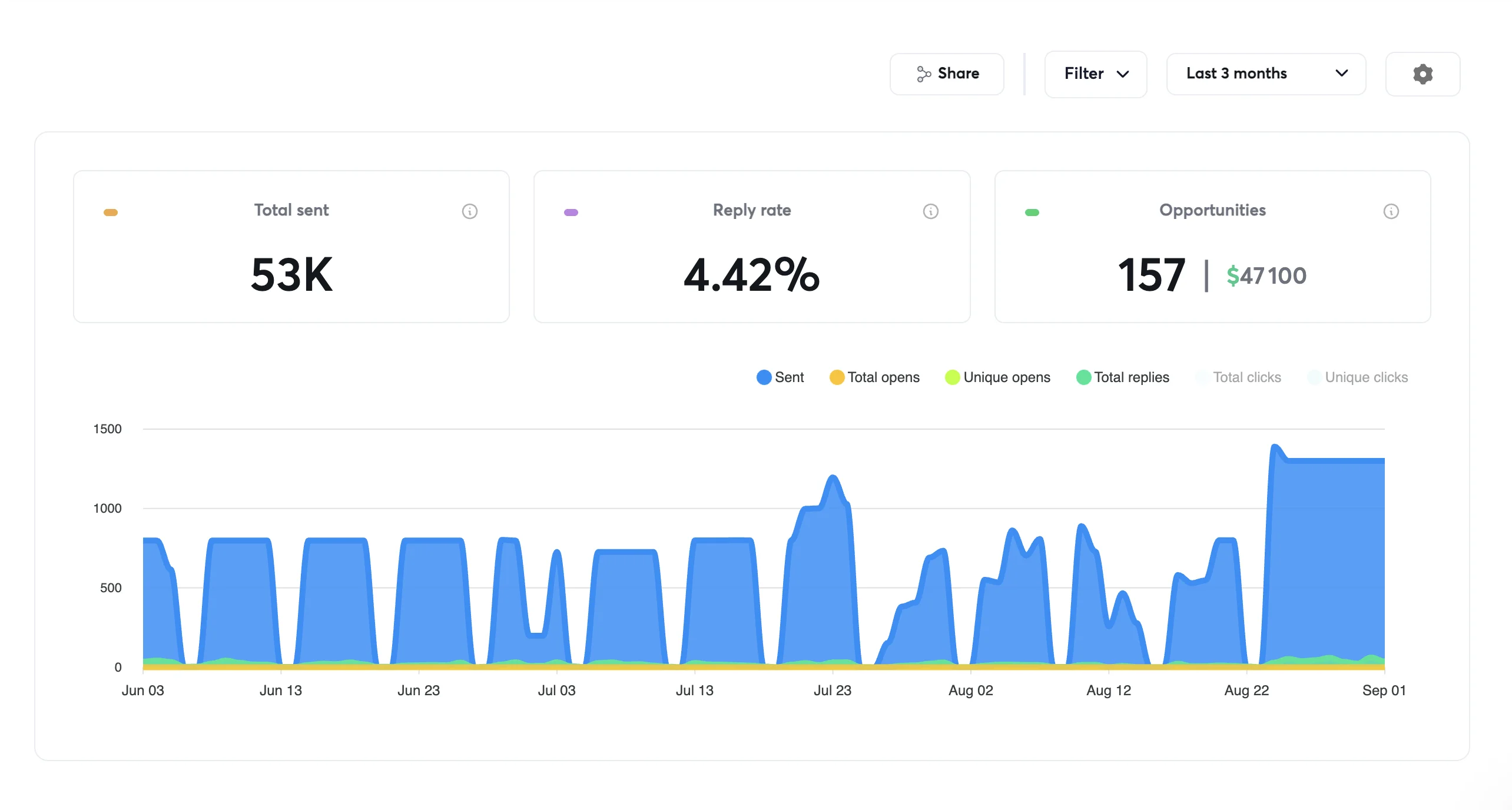
| Kanopy | 2-3 new clients closed per month, 4.42% reply rate on 53K sent | Trailing 3 months |
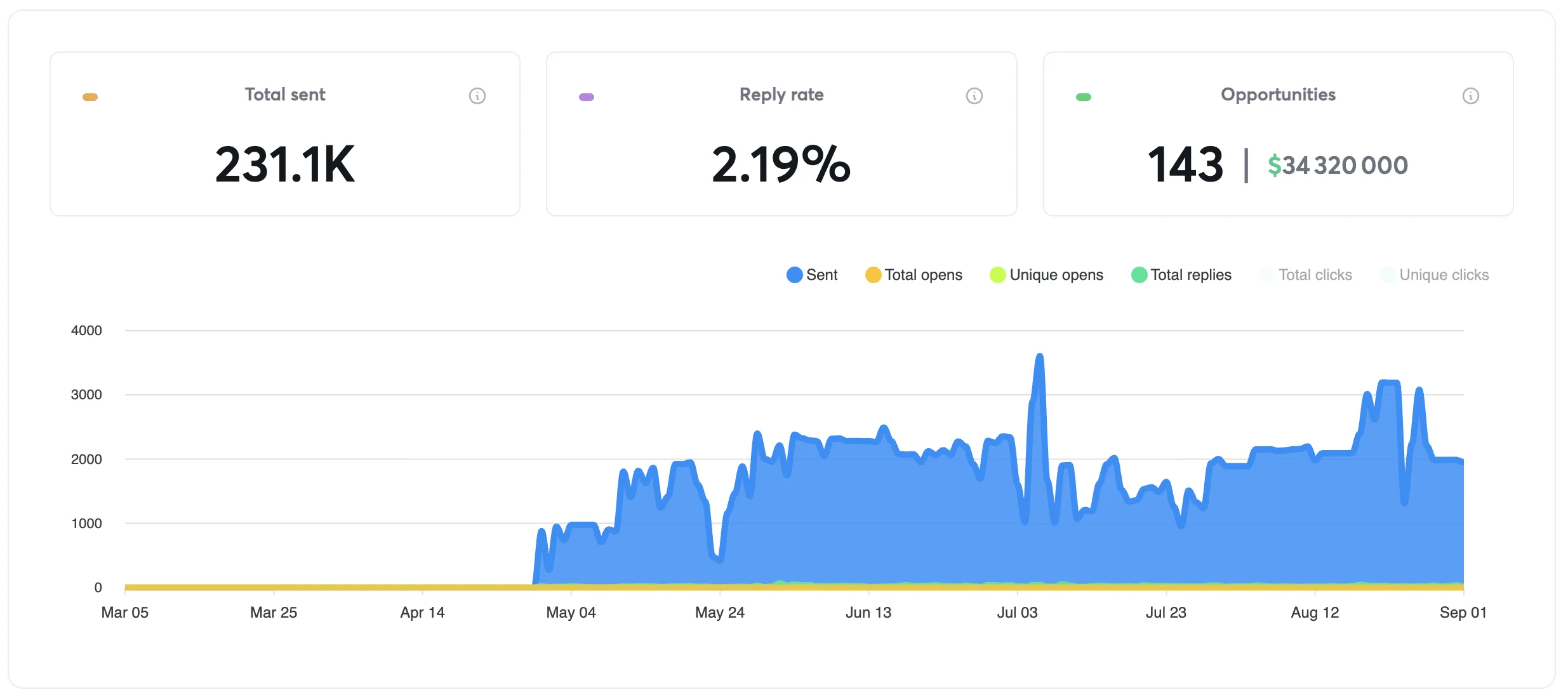
Notice what's missing from that table: a single reply-rate number leading any of the rows that actually matter to the client. The reply rate for one of our clients, AdLeverage, an HVAC agency, sits at a modest 2.19% lifetime - the kind of number that would send a nervous marketing director sprinting into a Slack huddle if reply rate were the scoreboard. It isn't, and AdLeverage's finance team seems suspiciously unbothered.
That account is closing $20,000-a-month retainers off a smaller number of much better-fit conversations, and the owner's own estimate puts the pipeline north of $3M. Volume never had to win this argument. Fit did.
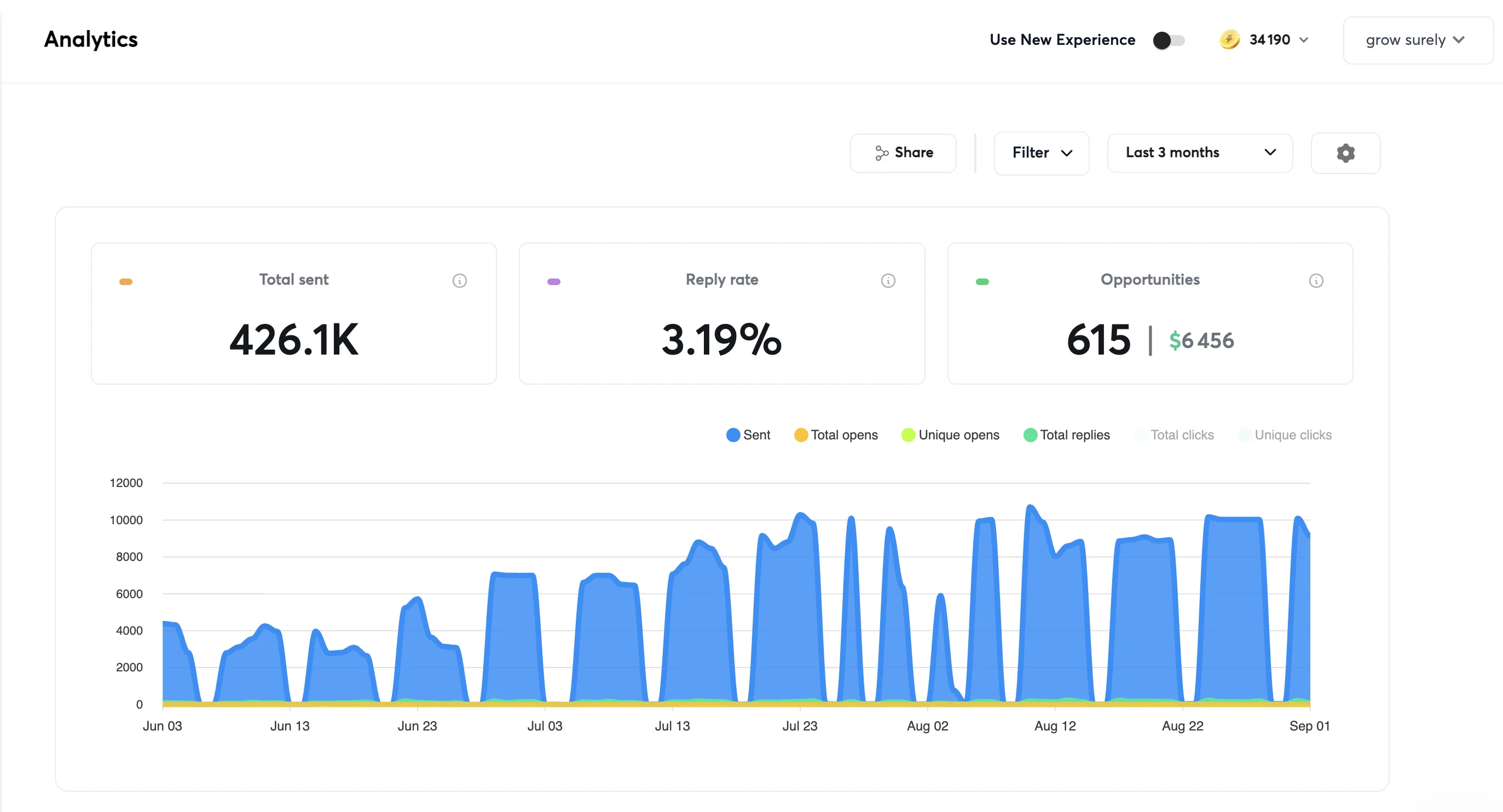
One of our clients, 360Clean, a commercial cleaning company, is the other end of the same lesson: a brand-new pilot that closed a real retainer inside ten days, because the strategy targeted a tight, checkable list from day one instead of spending the first month figuring out who to email.
Where outbound strategies actually break
Most of what gets blamed on "outbound doesn't work anymore" is a strategy problem wearing a channel problem's clothes, and doing a fairly unconvincing job of the disguise. Four show up more than any others.
| The mistake | What it actually costs |
|---|---|
| ICP too wide | Every list is a little wrong, every message has to speak to everyone, reply rate stays flat no matter how the copy changes |
| No feedback loop | Month six looks exactly like month one, because nothing learned anything |
| Channels added before the message works | A weak message on three channels is a weak message reaching more people faster |
| Reply rate treated as the finish line | Campaigns get judged on the wrong number and the wrong ones get killed |
The pattern underneath all four is the same: someone mistook activity for a system, the way answering forty emails a day feels productive right up until you notice none of them were to a prospect. A strategy that changes nothing after the first month isn't disciplined, it's stalled - and the accounts that keep producing are, without exception, the ones somebody is actively adjusting every single week.
Build it yourself, or hand it off
Running the four stages above yourself is entirely possible, and plenty of founders should do exactly that before paying anyone else to guess at their ICP for them, badly, at a markup. The honest breaking point isn't skill, it's hours - once building lists and chasing replies eats more time than closing the deals those replies produce, the math on doing it yourself stops working, usually right around the week you notice you've found more email addresses than you've had actual conversations.
| If this is you right now | Start here |
|---|---|
| Proving the message before spending real budget | Run it yourself |
| Volume is proven, ready to own it for years | Hire an SDR |
| Want the system running this month, not next quarter | Hand it to an agency |
The three routes people actually choose between, roughly in order of how much they'd rather never think about a CSV again: run it yourself while you're proving the message works, hire an SDR once volume is proven and worth owning long-term, or hand the whole system to an agency that's already run it for other companies.
Whichever route fits, the four-stage system doesn't change. Only who's running it does.
We laid out the real decision tree between those three, including where a hire pays for itself and where it doesn't, in . And if the deciding factor is cost, the full breakdown by pricing model - retainer, pay-per-meeting, or an in-house hire - is in .
A 90-day rollout, quarter by quarter
Here's the order we'd actually walk a new client through, not the compressed version that fits on a slide.
| Weeks | What's actually happening |
|---|---|
| 1-2 | Build the ICP from real customer data, pull a first list of 200-300 companies |
| 3-4 | Launch the first-touch message on one channel, watch replies daily, don't touch the ICP yet |
| 5-8 | Layer in a second channel once the message is proven, start reading weekly numbers as a rhythm |
| 9-12 | Feed the quarter's data back into the ICP and list - stage four, running for real the first time |
Most companies want to compress this into three weeks and get frustrated when the numbers don't compound yet, the way a person plants a seed on Monday and checks for a tree by Thursday. They can't - compounding needs at least one full loop through all four stages before there's anything to compound. Ninety days is roughly one loop.
Does this kind of outbound strategy still work in 2026?
Yes, for the companies still running a system instead of a rented list and a Notion template nobody's opened since March. The ones we watch stall out every year share the same shape: wide ICP, one channel, no feedback loop, reply rate as the only number anyone checks.
The ones that keep compounding do the opposite, on all four counts, every single week, whether or not the week felt exciting. That's really the whole strategy, which is a deeply unsatisfying sentence to land on after a page this long. It's less a secret and more a discipline nobody wants to admit is just discipline - the outbound equivalent of eating vegetables and going to bed on time.
| The quick recap | |
|---|---|
| What it is | The system deciding who, when, which channel, and what happens to the data after |
| The 4 stages | Sharpen the offer, first pitch, multi-channel, compound |
| What actually matters | ICP tightness and a real feedback loop, not reply rate alone |
If you'd rather see this system run on your own pipeline than build it from a blog post, that's what our cold email service does, using the exact four stages above.
What is an outbound sales strategy?
The system that decides who you contact, in what order, on which channels, and how you measure whether it's working - before a single email goes out. Without it, outbound is just activity with no compounding.
What's the difference between an outbound strategy and outbound tactics?
A tactic is one move - a subject line, a follow-up cadence. A strategy is the system deciding which tactics get used, on whom, and how results feed the next campaign.
How do I build an ICP for outbound if I've never done one before?
Start from your best 10-20 existing customers. List what they shared before they bought: company size, industry, the tool they already used. That pattern is your ICP draft.
How many channels should my outbound strategy use?
Start with one, prove the message, then layer a second. Adding channels before the message works just multiplies the noise, not the results.
How often should I revisit my outbound strategy?
Weekly for the numbers, monthly for the ICP and messaging. The accounts that keep working are the ones someone actively adjusts every week.
What's the most common reason an outbound strategy fails?
The ICP is too wide. A loose "who we sell to" means every list is a little wrong and reply rates stay flat no matter how the copy changes.
Can a small B2B company run its own outbound strategy without an agency?
Yes, especially early. The breaking point is time - once list-building and chasing replies eats more hours than closing does, it's worth a hire or an agency.
How long before an outbound strategy shows results?
Real signal shows up in 1-2 weeks of a well-targeted campaign. A full quarter is the honest timeline for knowing whether it compounds.
Run the strategy, not just the send.
We build the ICP, run the sequence, and read the numbers for you - free for your first 7 days. No card, no contract.
Get my free meetings
P.S. If your outbound strategy is really just "we send emails sometimes," which of the four stages above is actually missing?